Summary:
What Is the Difference Between Cloudways Flexible and Autonomous?
Cloudways Flexible is a traditional hosting plan where the server resources are fixed and the upgrades need to be done manually. Cloudways Autonomous is a fully managed auto-scalable WordPress hosting solution powered by Google Kubernetes with unlimited PHP workers and Cloudflare Enterprise CDN included.
Cloudways Flexible vs Autonomous: Quick Summary
- Load Handling Speed (lower is better): Cloudways Autonomous handles 500 concurrent visitors in 20 ms response time, while Flexible took 266 ms.
- TTFB Speed (lower is better): Autonomous averages 365ms vs 428ms on Flexible (15% faster), based on monitoring from March 2024 to November 2025.
- Uptime (higher is better): Both plans achieved 99.99% uptime. Flexible had 10 outages (1h 13m downtime) while Autonomous had only 2 outages (14 minutes downtime).
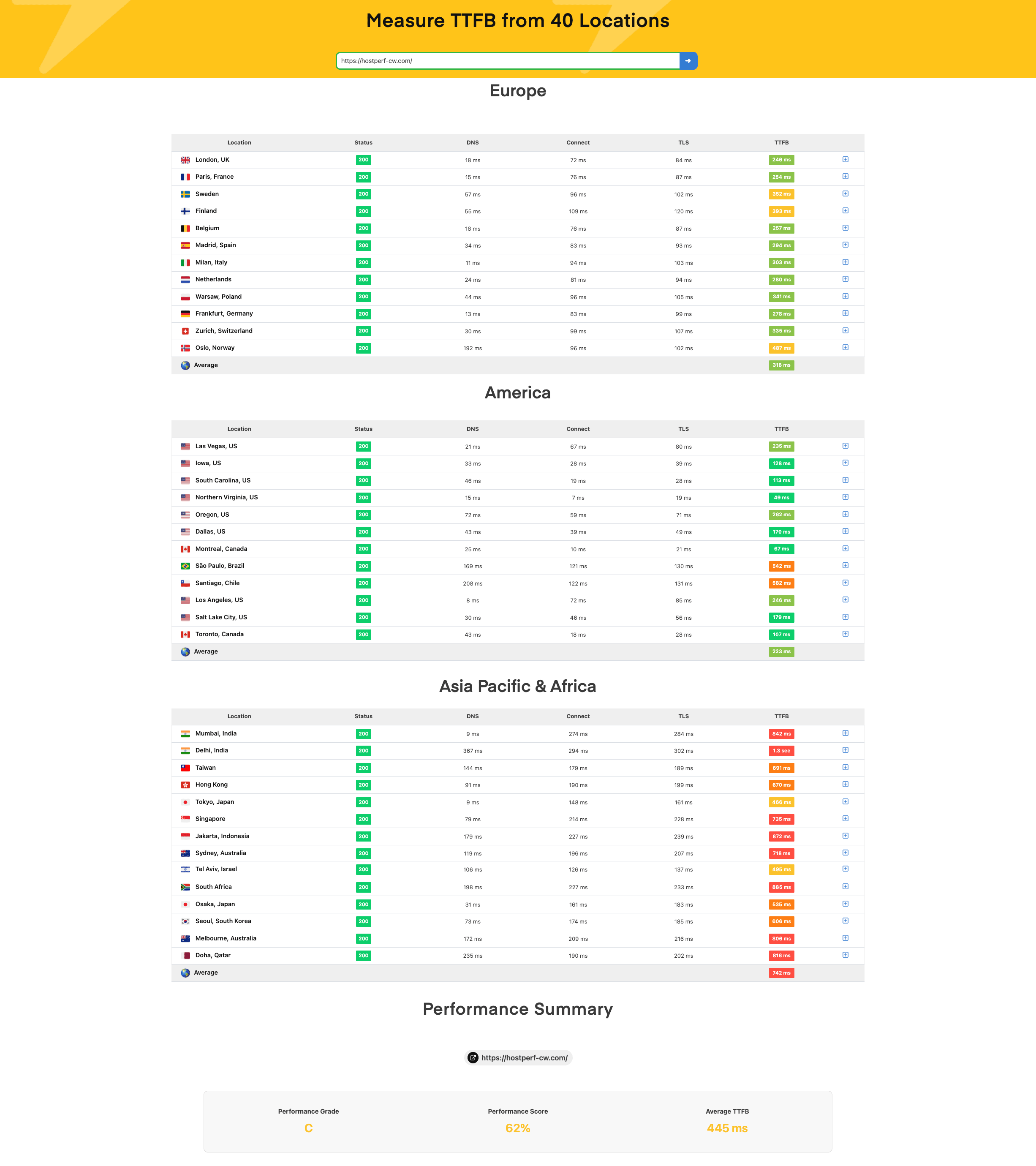
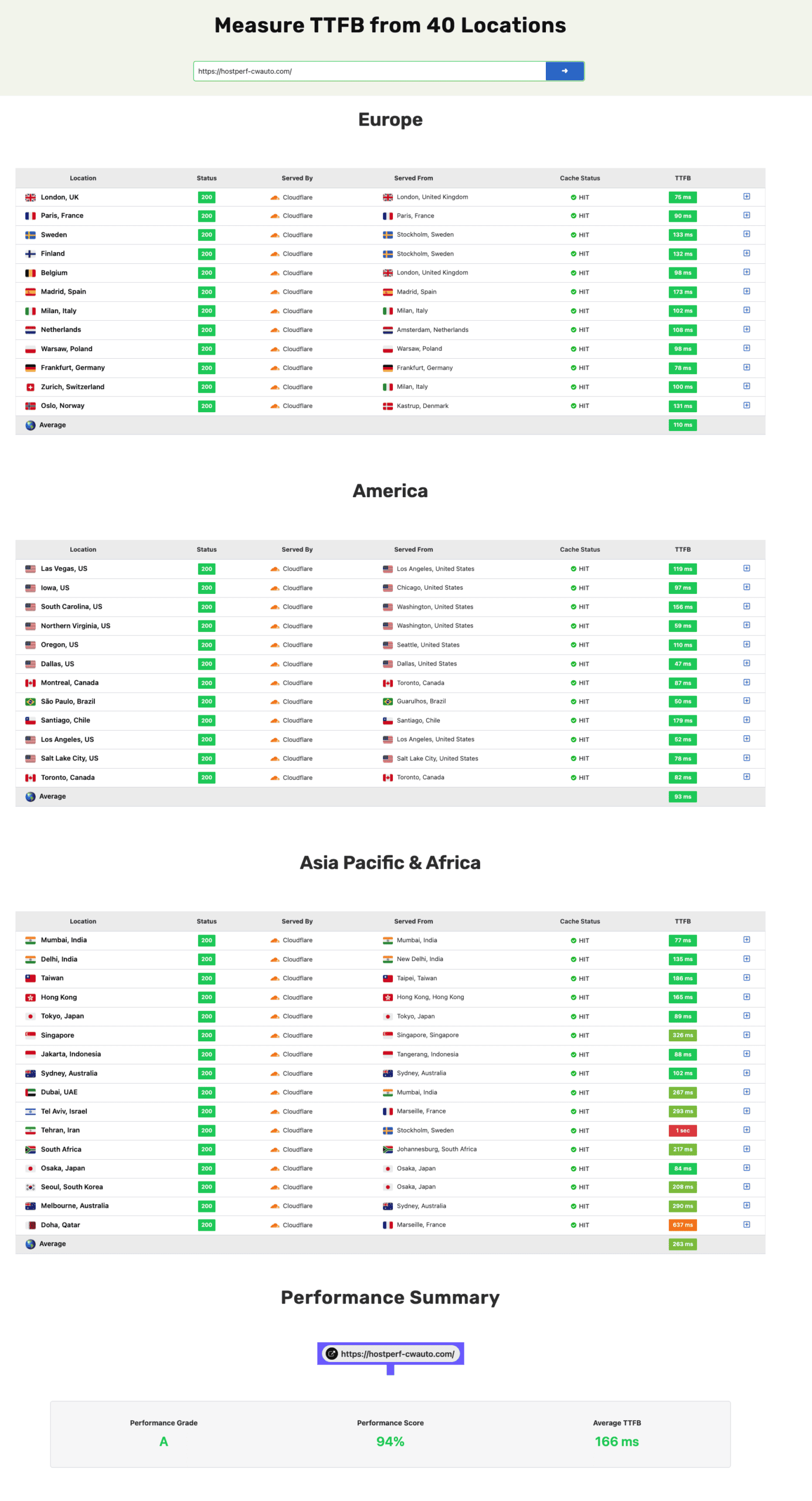
- Global TTFB (lower is better): Autonomous averages 166ms globally vs 445ms on Flexible, thanks to Cloudflare Enterprise CDN edge caching.
- Auto-Scaling: Autonomous scaling automatically via Google Kubernetes. Flexible requires manual server upgrades.
- PHP Workers: Autonomous offers unlimited PHP workers. Flexible has a fixed quota per plan.
- Backups: Autonomous includes free daily backups. Flexible charges $0.33/GB per application.
- Price: Flexible starts at $7.70/month (after discounts). Autonomous is priced higher but includes Cloudflare Enterprise CDN.
Who Should Choose Cloudways Flexible?
Cloudways Flexible is best for most common websites and small business owners with low to moderate traffic. It can even handle higher traffic, considering you can watch out for the server resources and upgrade manually when needed. It offers more server control, can host unlimited websites, and is affordable to get started.
Who Should Choose Cloudways Autonomous?
Cloudways Autonomous is best for serious business websites where each of the traffic counts. It is the best for high traffic website, WooCommerce stores, LMS sites, event booking and event media sites where you need a guaranteed uptime and auto scaling as needed. It is powered by Google Kubernetes, the best in the industry for auto-scaling, and Cloudflare Enterprise makes it incredibly faster across the globe.
If you are confused between the Cloudways Flexible and Autonomous plans to host your site, our data will help you make the right choice.
At Hostingstep, we purchase hosting accounts, test them 24/7, 365 days a year under a standardized setup. We’ve been testing 30 hosting providers and we have collected over 600 days of performance data between the Cloudways Flexible and Autonomous plans.
Summary: Cloudways Flexible is best for most sites, while Autonomous is recommended for high-traffic sites that require autoscaling.
Cloudways is running a summer promotion until 15 September 2026: 40% off for four months with the code SUMMER404, plus unlimited free expert-led migrations. It applies to every plan, including Autonomous. On the $11 DigitalOcean Standard plan that’s $6.60/month and $17.60 saved across four months, against $9.90 over three months with our year-round HOSTINGSTEP code.
Check Cloudways dealCloudways Flexible vs Autonomous: Performance
The Cloudways Flexible and Autonomous hosting performance is measured by a series of tests, including TTFB, Uptime, Load handling, and Global TTFB test.
We started testing Cloudways Autonomous on March 1, 2024, and the flexible plan in 2020. So, we are considering the ~600 days of data for performance comparison from March 1, 2024 to November 1, 2025.
Test 1: Load Test
The significant difference between Flexible and Autonomous plans is the Autonomous plan’s auto-scaling feature, whereas upgrades on the Flexible plan need to be done manually. So, I start my comparison with the load handling test.
The load test is done using a Loader.io tool. We sent 500 constant visitors to both flexible and autonomous test sites, and the average response time was measured. The lower response time indicates that the server is faster in handling traffic spikes.
In these test results, the Cloudways Flexible took an average response time of 266 ms to handle the load. However, Cloudways Autonomous handled the same load with an average response time of just 20 ms.
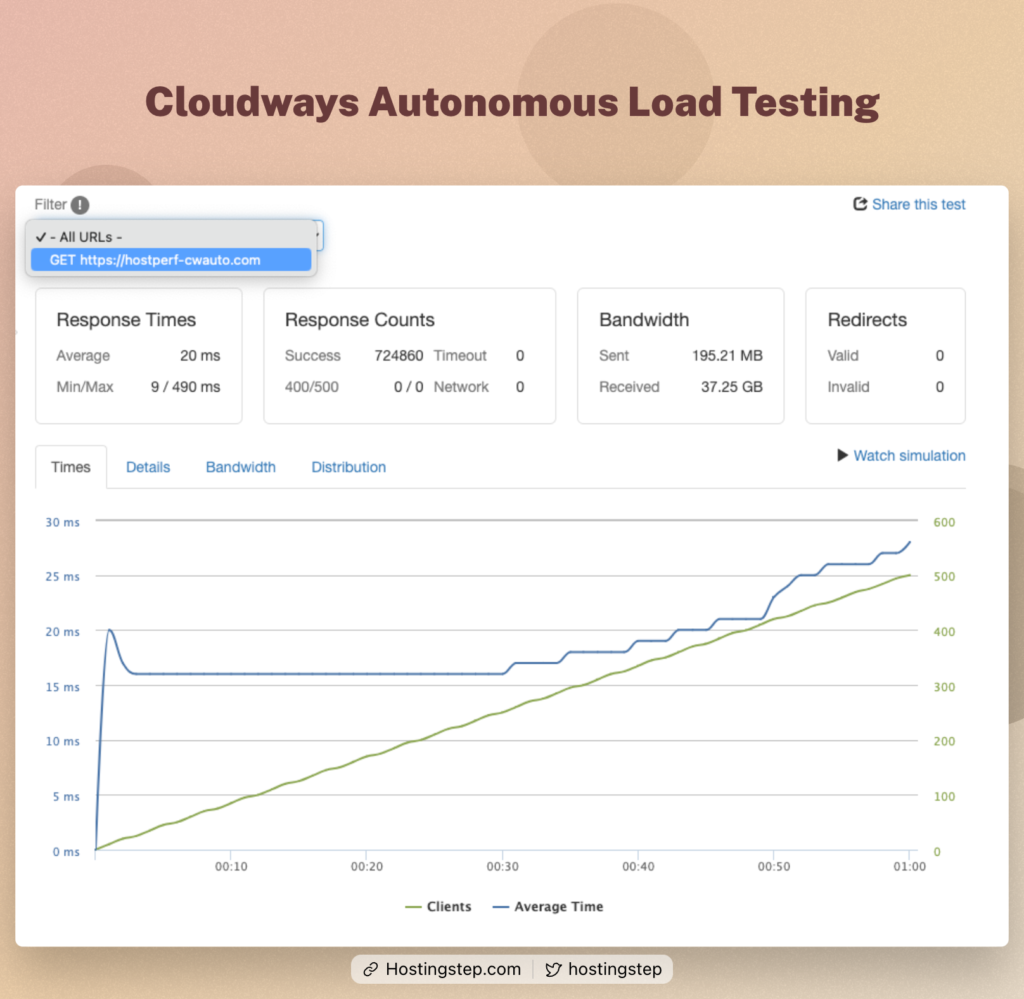
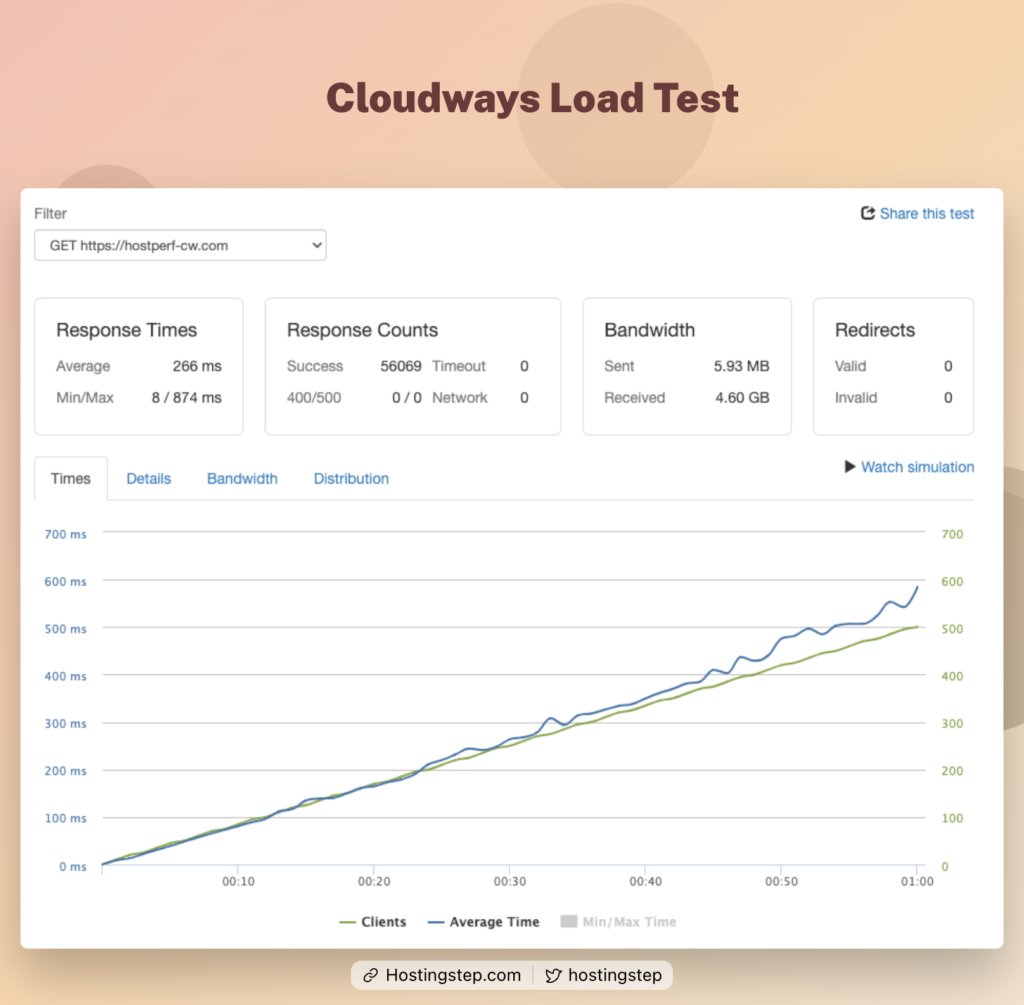
Autonomous load handling is super impressive. It offers 26 times faster performance than Flexible hosting. Google Kubernetes and Cloudflare Enterprise CDN are the top reasons for the speed of autonomous plans.
Google Kubernetes is widely known for its reliable auto-scalable architecture. As far as I know, Cloudways is the first company to deploy Google Kubernetes for WordPress hosting. Cloudflare Enterprise is vital in delivering faster pages with its edge caching CDN.
Test 2: TTFB and Uptime
In the TTFB test, the Flexible and Autonomous test sites are pinged every 60 seconds once from 19 North American regions, and the average TTFB score is calculated.
Based on the 600 days of data from March 1, 2024, to November 1, 2025, the flexible side recorded an average speed of 428 m/s with 99.99% uptime. It cost a total of 10 outages, which lasted for 1 hour and 13 minutes. In the same time period, Cloudways Autonomous recorded an average speed of 365 m/s and an uptime of 99.99%, but it had only 2 outages with 14 minutes of downtime.
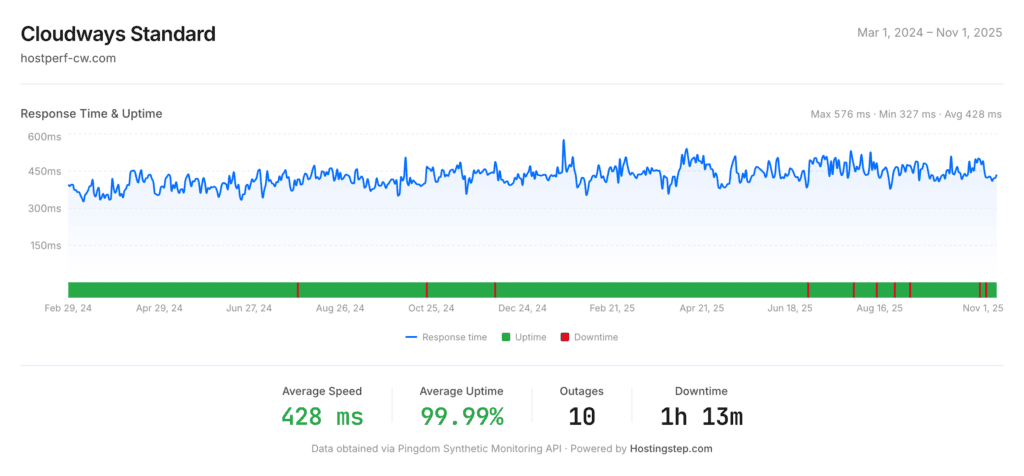
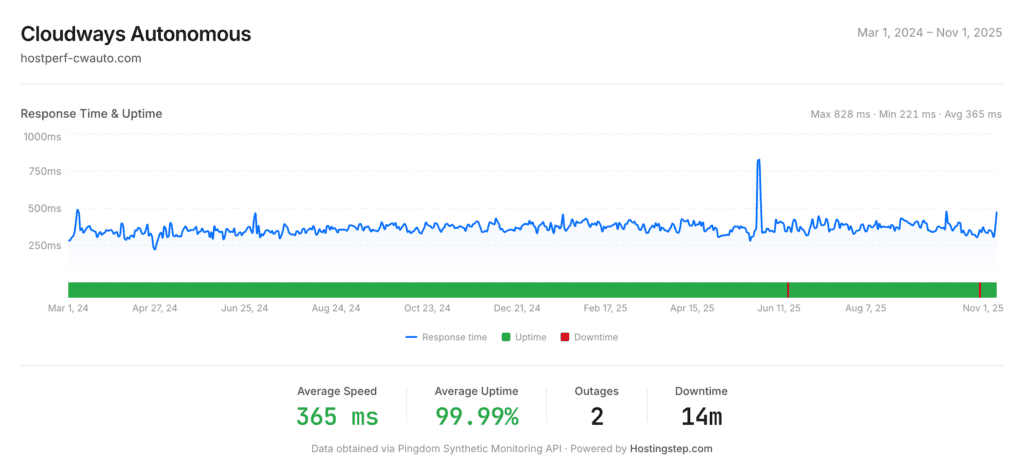
Summary: Autonomous offers better speed and uptime scores than Cloudways flexible plans.
While the above screenshot was tested from US-only locations, I included global TTFB below, and its scores are worth watching for sites that receive international traffic.
In the global TTFB test, Flexible and Autonomous sites are pinged from 40 international locations to calculate the overall global TTFB.
The data shows that Autonomous overtakes Flexible with an average global TTFB of 166 ms, while the Flexible site got an average global TTFB of 445 ms. The huge difference in global TTFB is due to the presence of Cloudflare Enterprise CDN with Autonomous plans. It keeps your entire site’s files across its 300+ CDN locations and delivers the content faster to users. In the case of flexible, there is no CDN involved, so its TTFB scores are moderate for global visitors.
| Global TTFB | Flexible | Autonomous |
|---|---|---|
| America | 223 ms | 93 ms ✅ |
| Europe | 318 ms | 110 ms ✅ |
| Asia and Pacific | 742 ms | 263 ms ✅ |
| Total Average | 445 ms | 166 ms ✅ |
Cloudways Flexible Vs Autonomous: Features
1. Unlimited PHP Workers
Cloudways Autonomous offers unlimited PHP workers, helping you scale your website to any level. Flexible offers a fixed set of PHP workers per plan.
With an unlimited number of PHP workers, the site is guaranteed to work for all visitors regardless of the traffic.
2. Auto Scaling
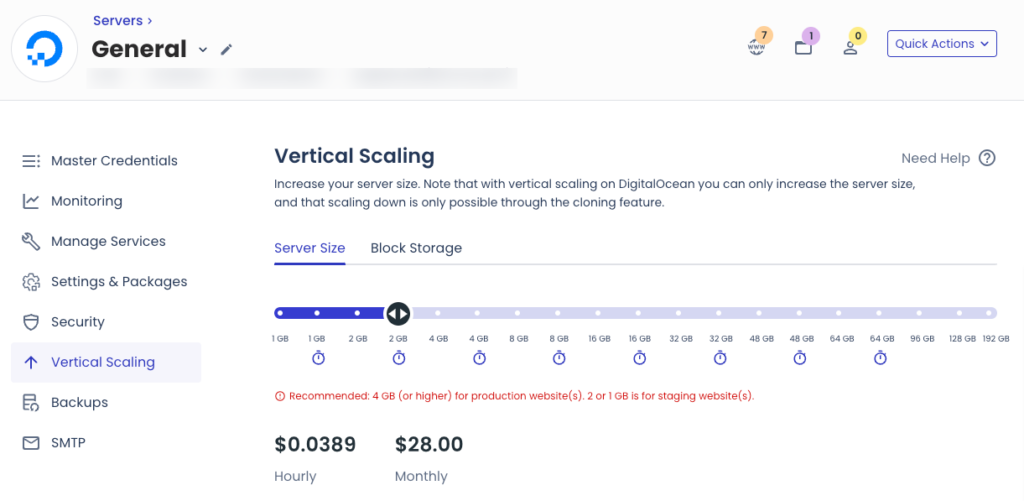
Our performance test shows that Autonomous uses Google Kubernetes, offering automatic horizontal and vertical scaling as needed. It also comes with load balancing to keep your website active regardless of traffic.
In the case of flexible, there is no autoscaling, and a manual upgrade is required. Again, if the upgraded plan can’t handle the traffic, you’ll need to keep upgrading manually.
This is where Cloudways Autonomous works as a genuinely auto-scalable WordPress host.
3. Cloudflare Enterprise
Autonomous comes with Cloudflare Enterprise CDN, which includes edge caching by default.
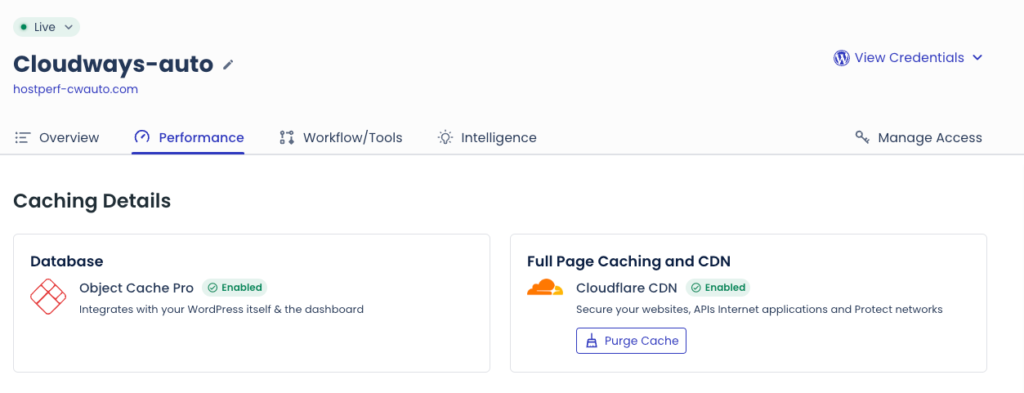
The Flexible plan also offers Cloudflare Enterprise CDN as an add-on. Still, due to the plan’s technical limitations of CPU and Memory resources, we can’t fully enjoy the benefits of Cloudflare.
4. Multiple PHP Versions
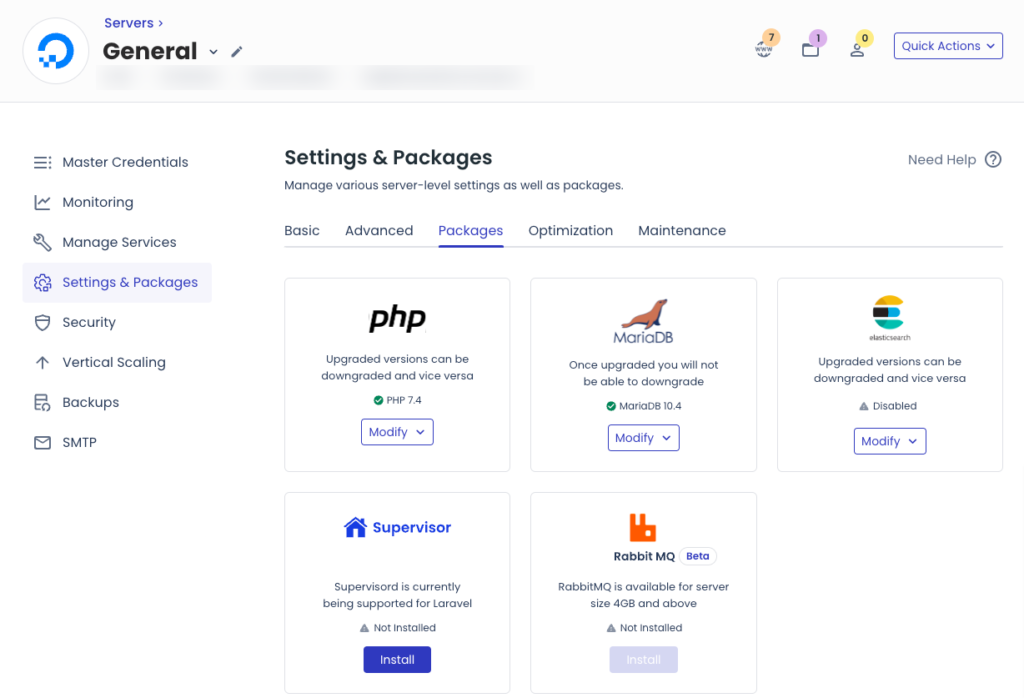
If you are hosting multiple sites on a Cloudways flexible plan, you can’t set different PHP versions for each. You need to go to server settings and select a single PHP version, which will be applied to all the applications hosted on the server.
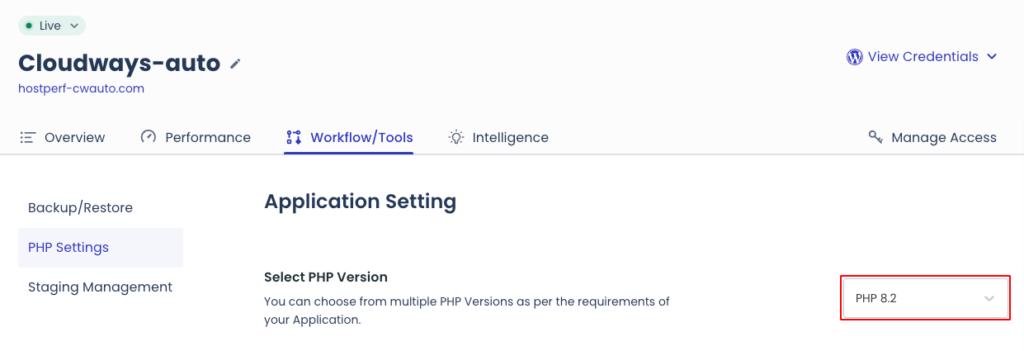
At Autonomous, you can choose a different PHP version for each application. Just select the application and open its settings, and the required PHP version will be selected automatically.
5. Automated Backups
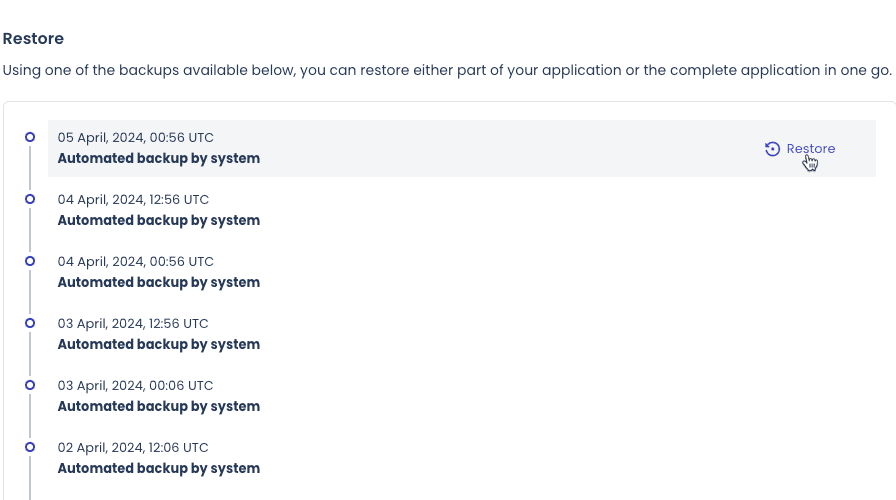
My most hated Cloudways flexible feature is the paid backups. It costs $0.33/GB per application for performing daily backups. The amount is small, but I hate anything extra besides regular hosting bills. This was fixed in Autonomous, with automated daily backups available for free.
Changelog:
June 30, 2026: We have updated the post with ~620 days of performance data comparison.
March 24, 2025: Replaced old TTFB and uptime data with fresh data from March 1, 2024, to March 1, 2025. The long-term performance data makes your decision-making easier.
September 10, 2024: We removed the three months of performance data (March to May 2024) and added six months of data (March to August 2024). Autonomous now comes with $100 free credits to try out. We have updated the post accordingly.