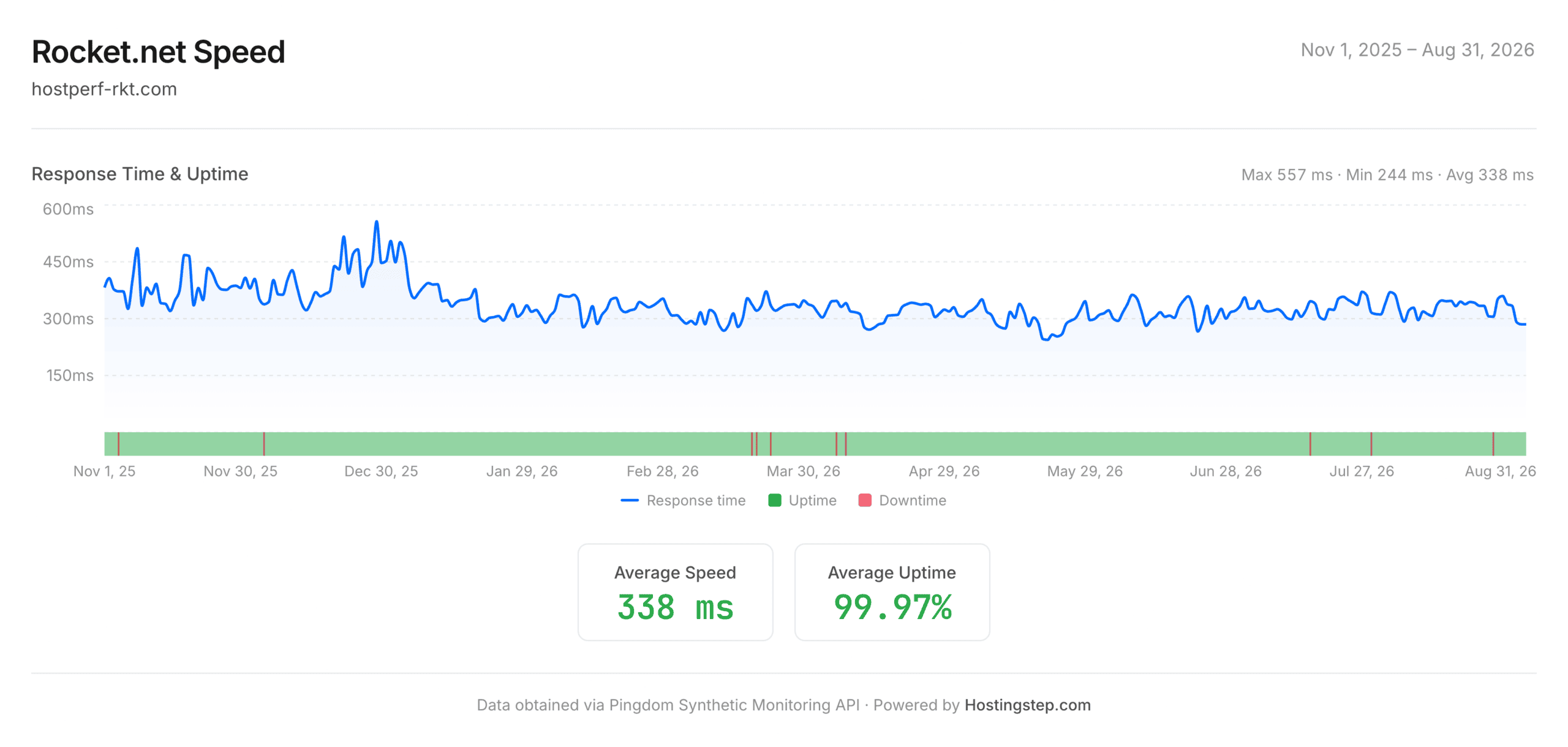
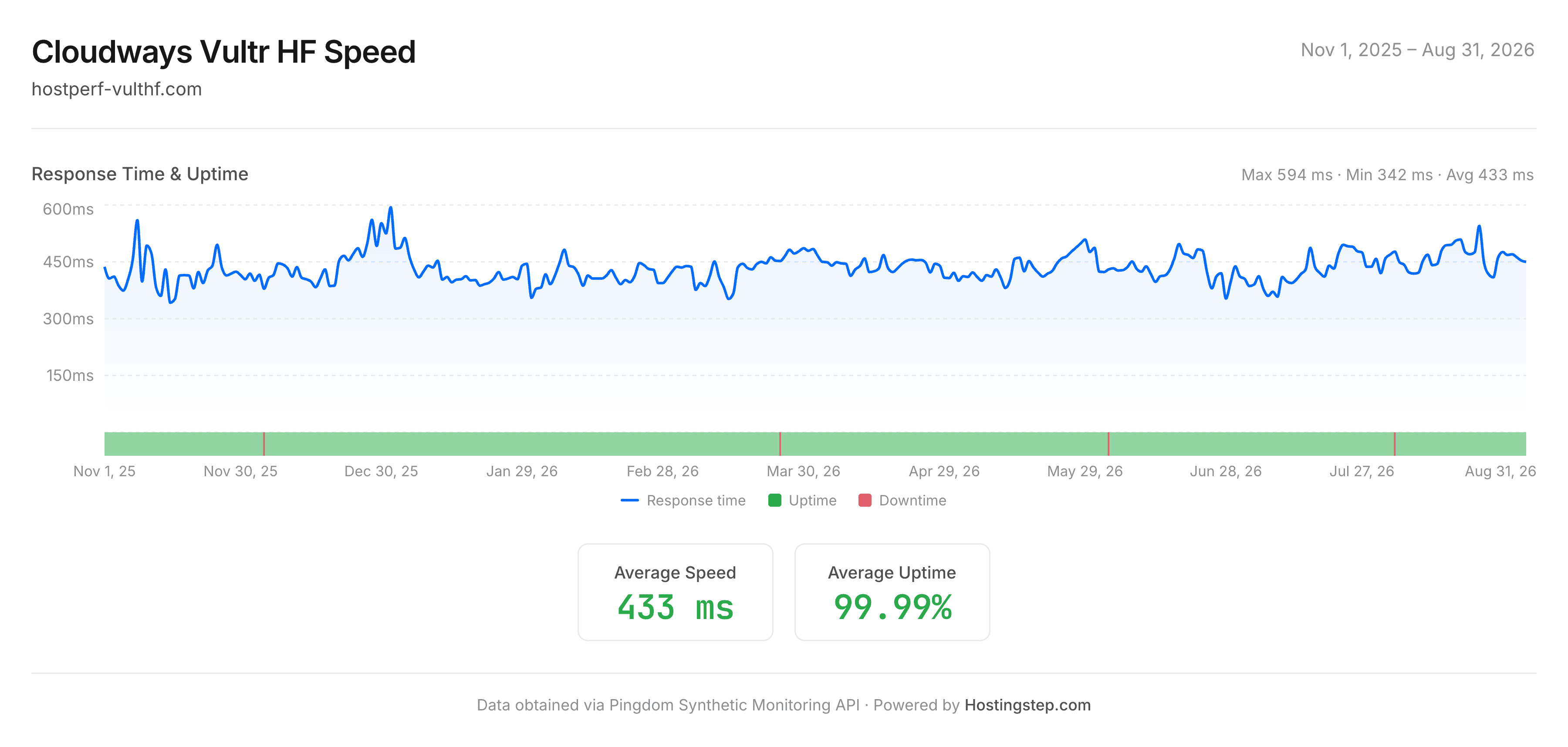
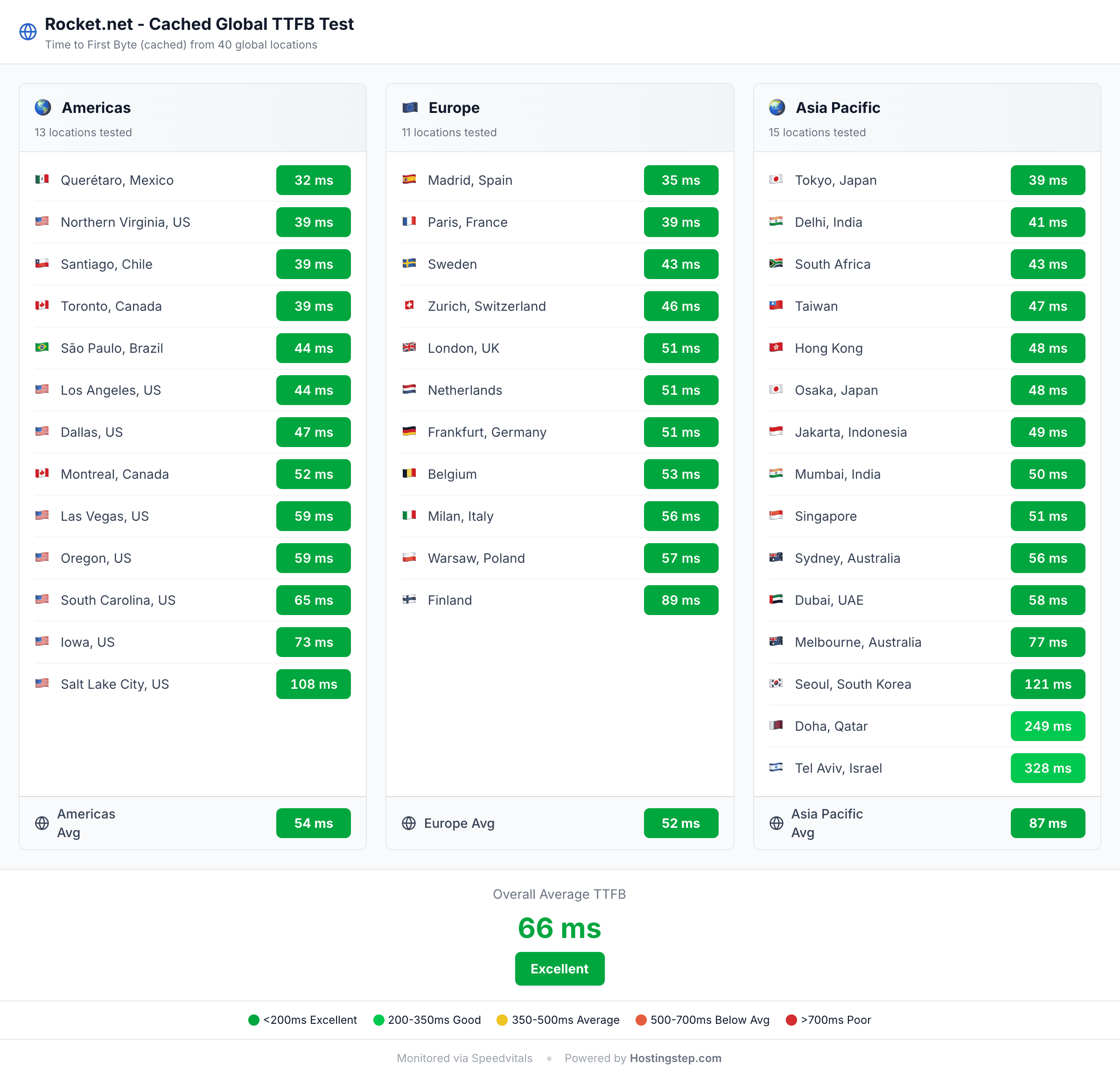
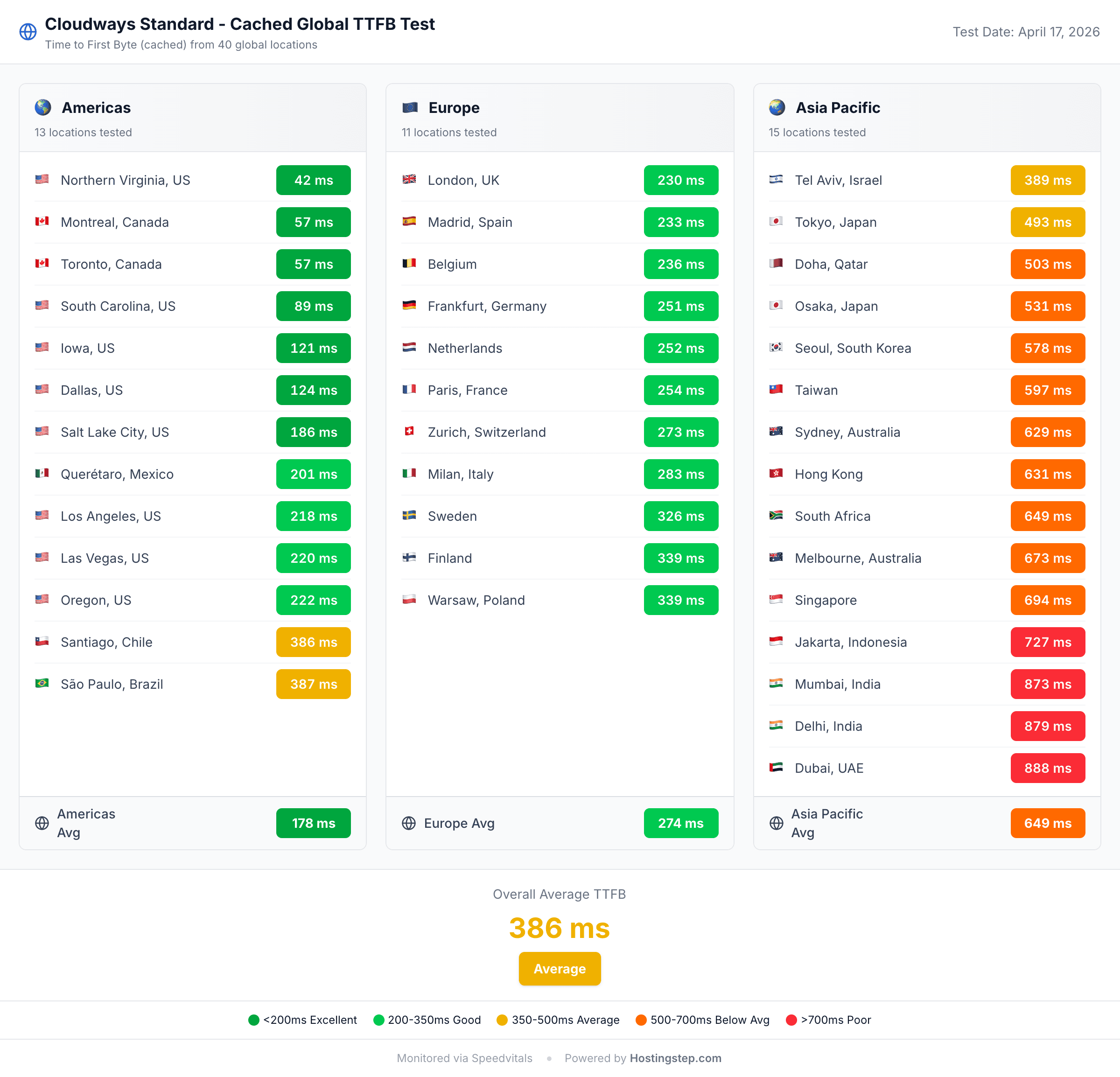
Summary: Rocket.net records 338ms response time, 99.97% uptime and 66ms global TTFB. Cloudways Vultr HF records 433ms response time, 99.99% uptime, 291ms load handling and 395ms cached global TTFB. The performance data of both the hosts are collected during the same time period between November 1, 2025 to August 31, 2026.
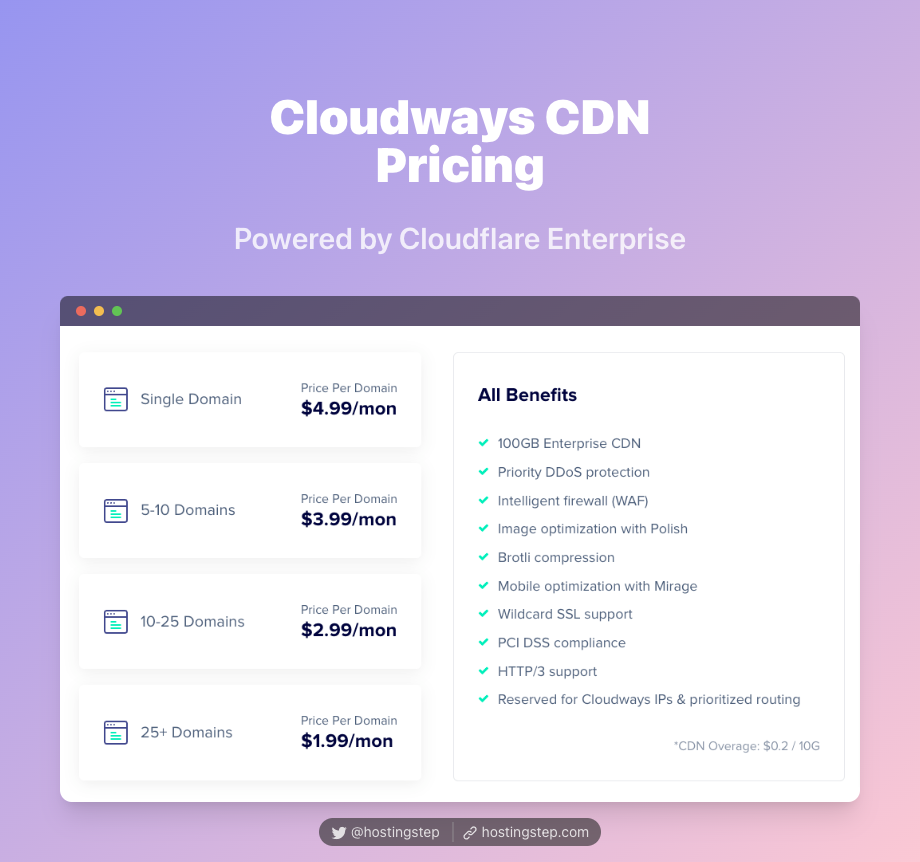
Rocket.net excels in better response time and catches the global TTFB performance primarily due to the presence of integrated Cloud for Enterprise CDN. Cloudways Vultr HF is tested without any CDN, so the response time and load handling scores are slightly downwards. If you need a similar performance with Cloudways, you can buy the Enterprise CDN add-on for $4.99 per domain.
Our Verdict:
| Metric | Rocket.net | Cloudways Vultr HF | Winner |
|---|---|---|---|
| Overall rank (of 29) | #27 | #20 | Cloudways |
| Final score | 5.85 | 6.43 | Cloudways |
| Average response time | 338ms | 433ms | Rocket.net |
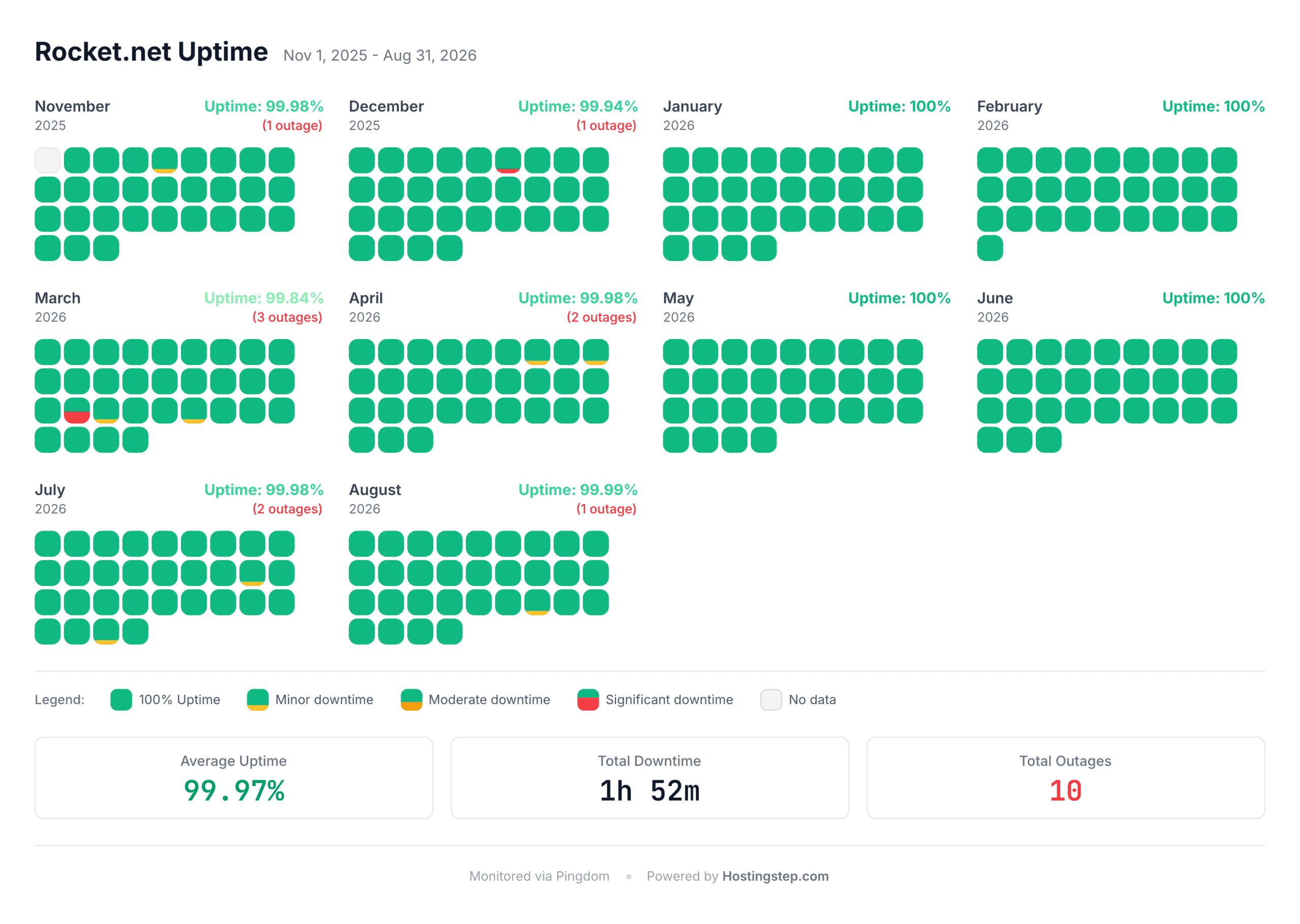
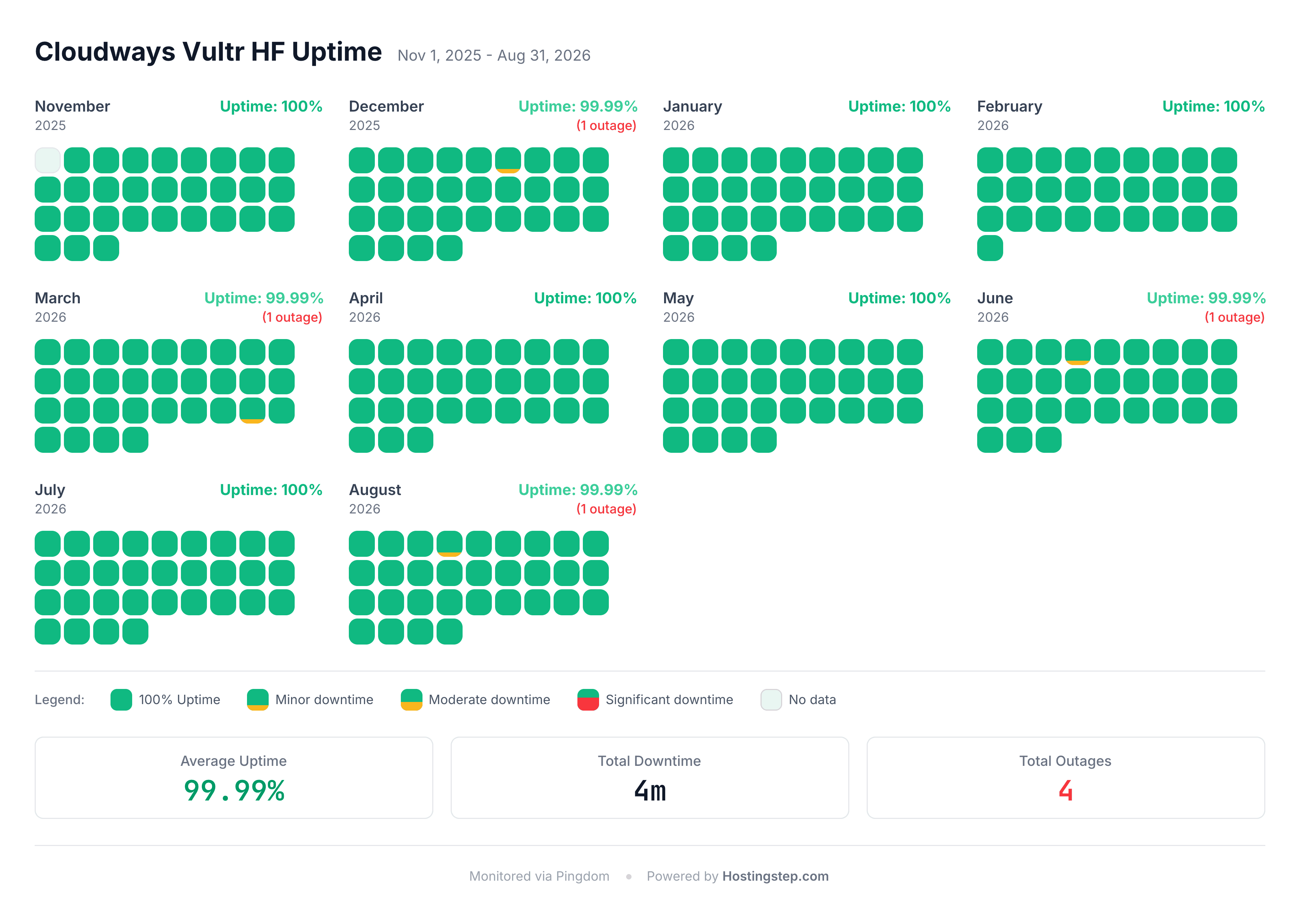
| Uptime | 99.97% (10 outages, 1 hour 52 minutes) | 99.99% (4 outages, 4 minutes) | Cloudways |
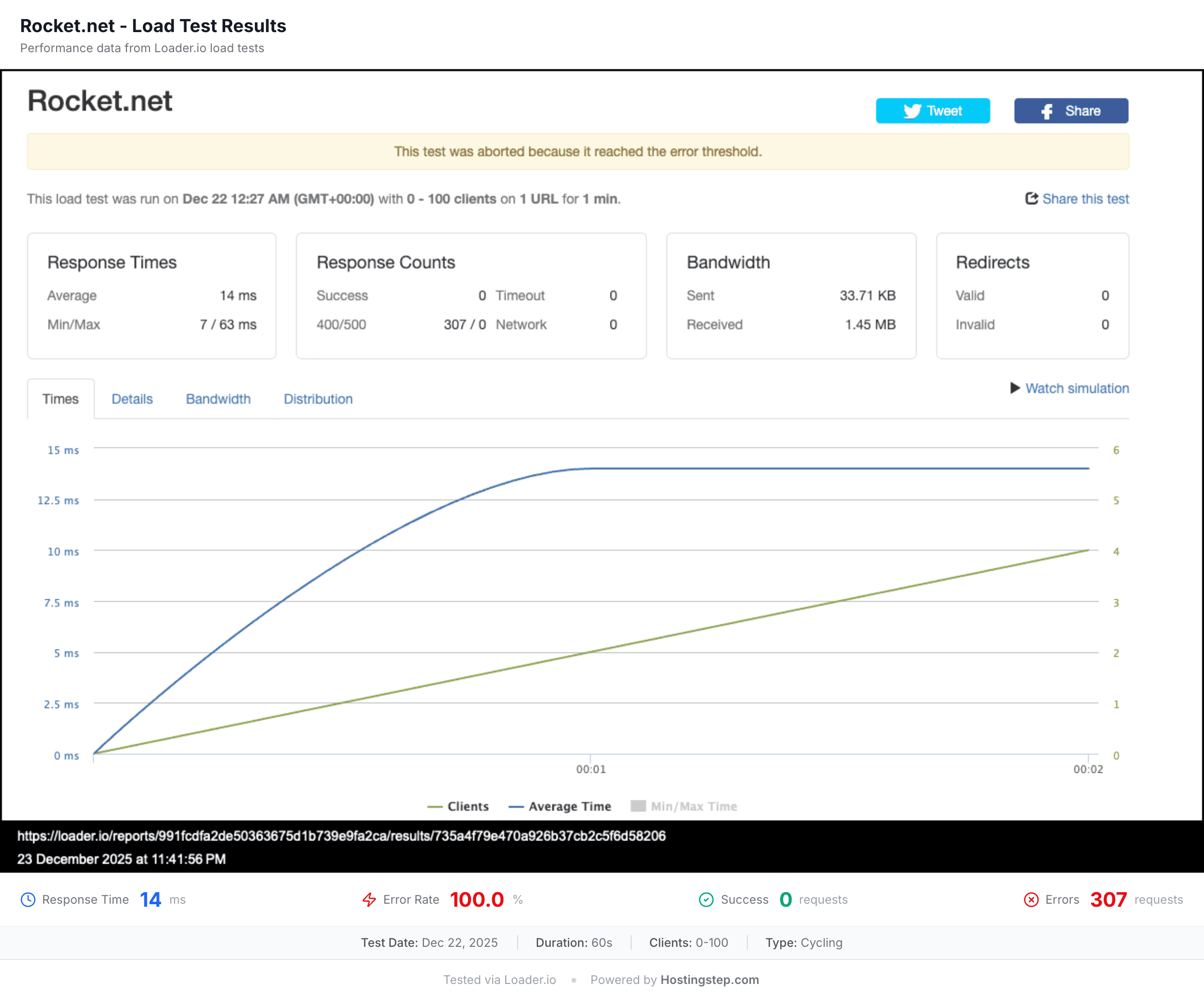
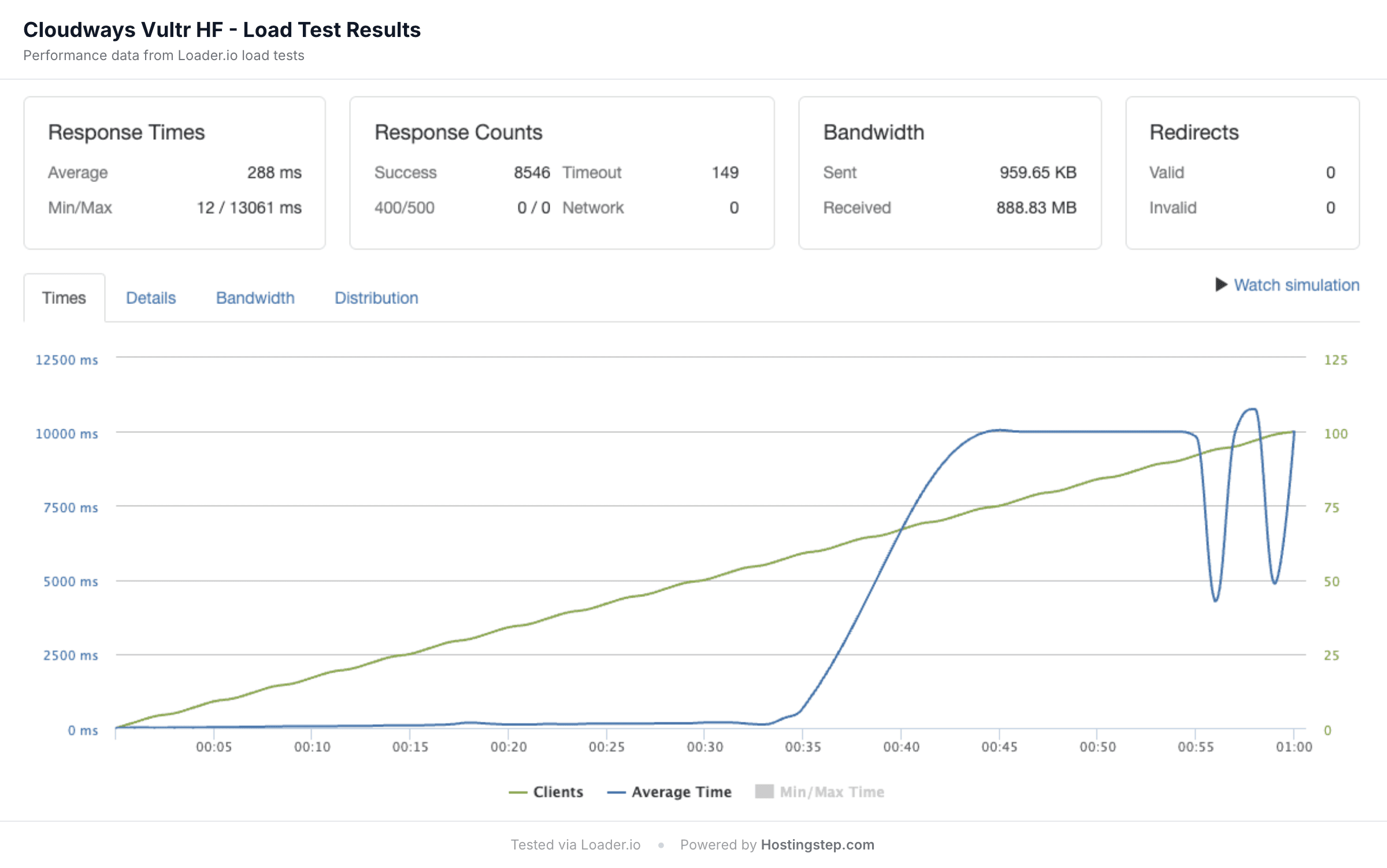
| Load handling (100 users, 60 seconds) | Did not complete (100% errors) | 291ms, 2.3% errors | Cloudways |
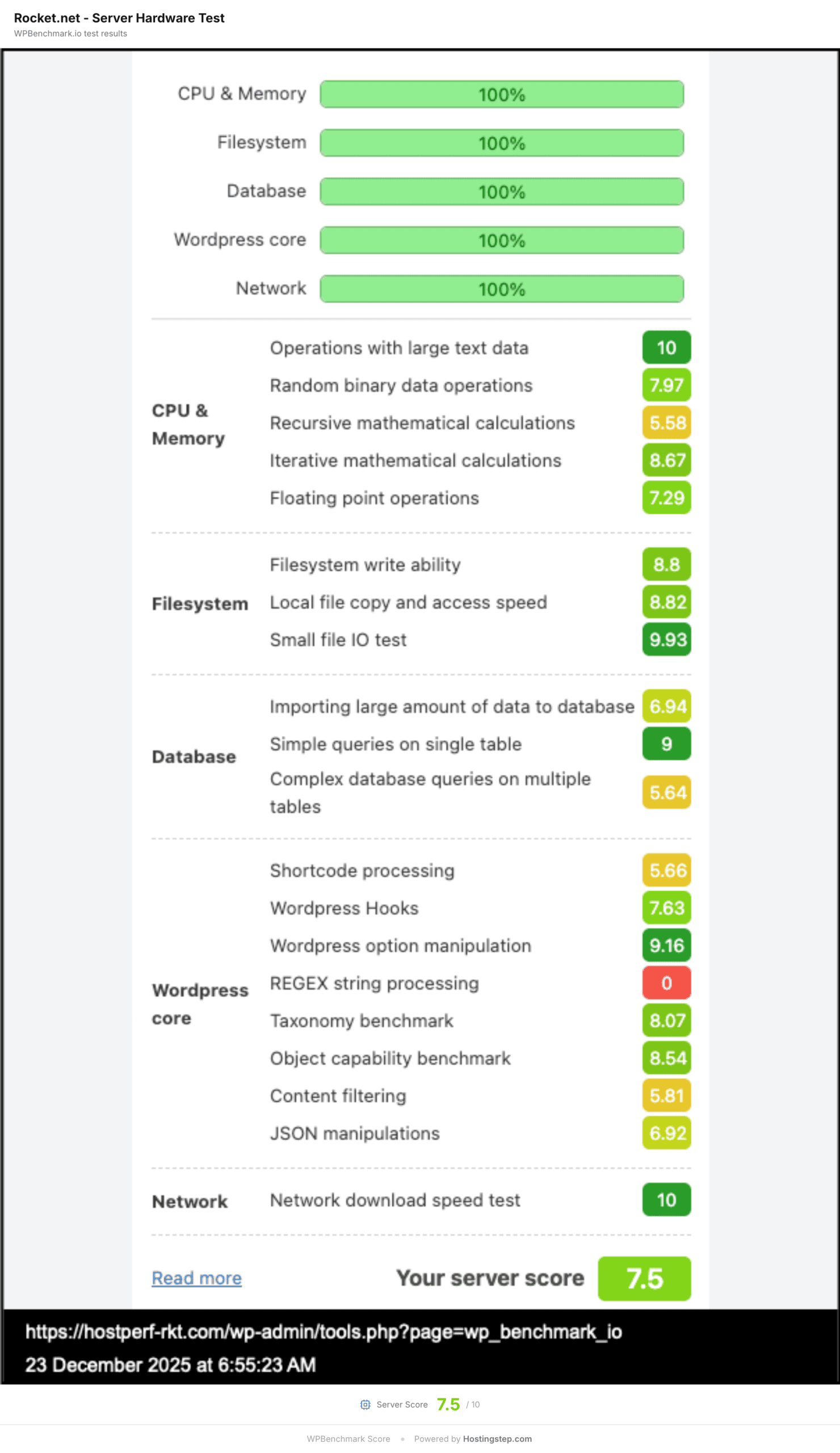
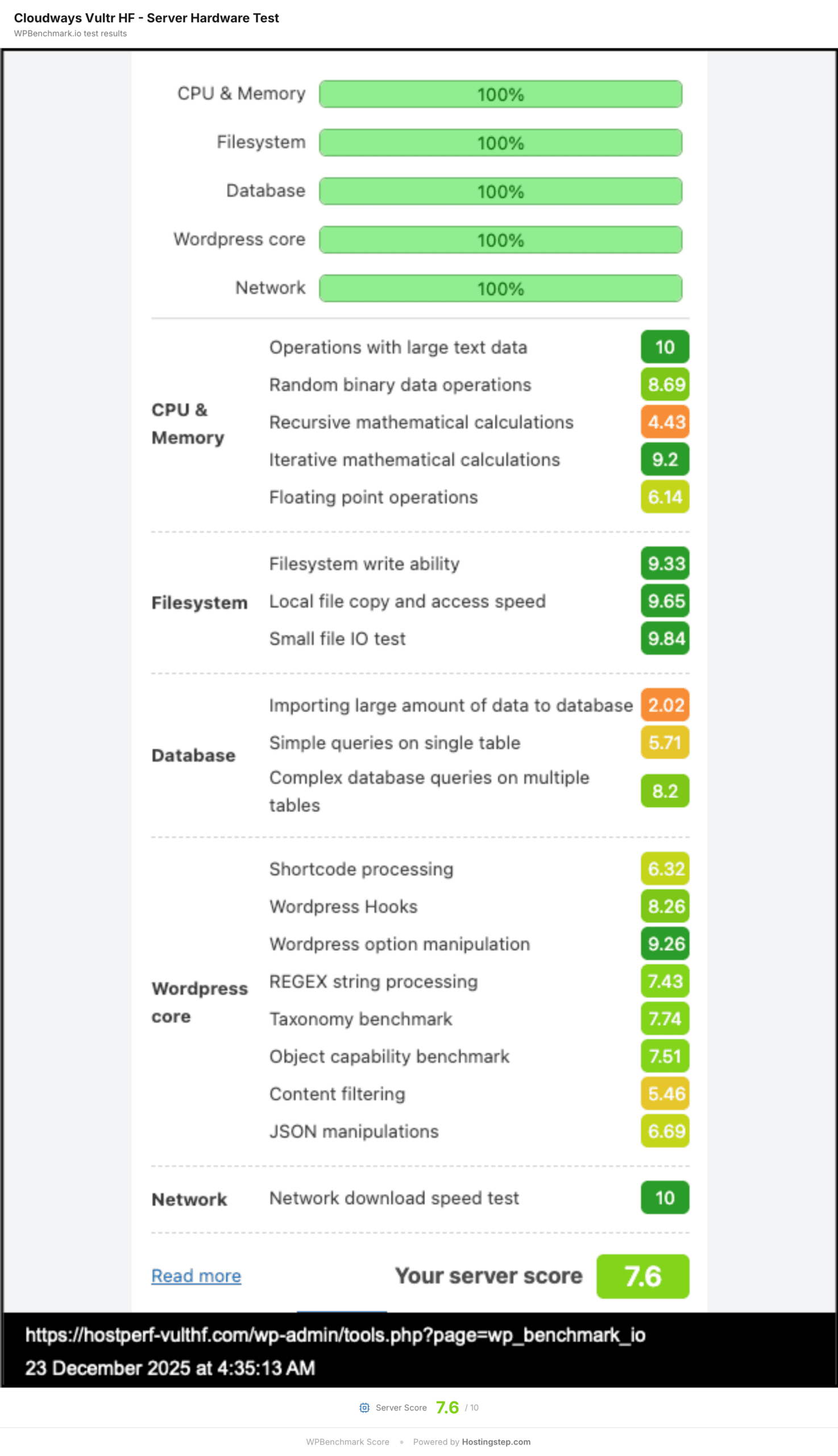
| Server hardware (WPBench) | 7.5/10 | 7.6/10 | Tie |
| Global TTFB (40 locations, cached) | 66ms | 395ms | Rocket.net |
| Sites included | 1 | Unlimited (CPU/RAM bound) | Cloudways |
| CDN (entry plan) | Cloudflare Enterprise included | Paid add-on at $4.99/domain | Rocket.net |
| Intro price | $25/mo | $16/mo | Cloudways |
| Visit Rocket.net | Visit Cloudways.com |
Rocket.net vs Cloudways: Speed
Rocket.net is 95ms faster than Cloudways Vultr HF on server response time. Rocket.net is tested with Cloudflare Enterprise edge caching while Cloudways is tested with origin server alone.
Rocket.net vs Cloudways: Uptime
Cloudways holds the strongest uptime record compared to Rocket.net.
It recorded 99.9990% with four small outages totalling four minutes. Rocket.net recorded 99.9742% with 10 outages totalling 1 hour 52 minutes. Both the host offers the uptime within their SLA of 99.9%. However, Cloudways is steadier than Rocket.net.
Rocket.net vs Cloudways: Load Handling
Rocket.net’s load test did not complete. Our Rocket.NET load test is blocked by its own Cloud First-Aggredited testing. We have communicated with their team to temporarily whitelist our testing IPs, but it didn’t go further, so we don’t have any data for Rocket.net.
Cloudways Vultr HF completed the same test at 291ms average response with a 2.3% error rate, tested on its origin server without the CDN add-on.
Rocket.net vs Cloudways: Hardware Server Test
Rocket.net and Cloudways Vultr HF are level on server hardware at 7.5/10 and 7.6/10.
WPBenchmark measures the CPU, memory and disk I/O allocated to the plan we bought, which is what serves uncached requests.
Rocket.net vs Cloudways: Global TTFB
Rocket.net is 6x faster than Cloudways on global TTFB.
Rocket.net recorded 66ms global TTFB when tested from 40 global locations. However, Cloudways recorded just 395ms. As we said already in the above section, the difference is due to the presence of Cloudflare CDN with Rocket.net. You can avail similar performance at Cloudways by buying their enterprise CDN add-on.
Rocket Vs. Cloudways: Features
Control Panel
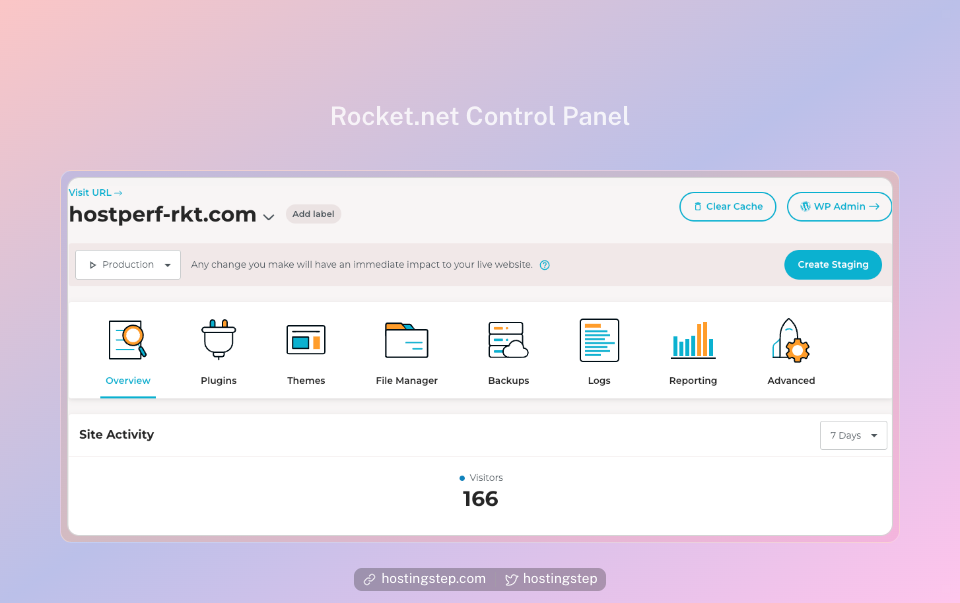
Rocket hosting comes with an excellent, neat, and no-nonsense control that provides access to most features like managing site updates, overview area, backups, logs, etc. The dashboard is much simpler; exploring all the settings won’t take more than two minutes.
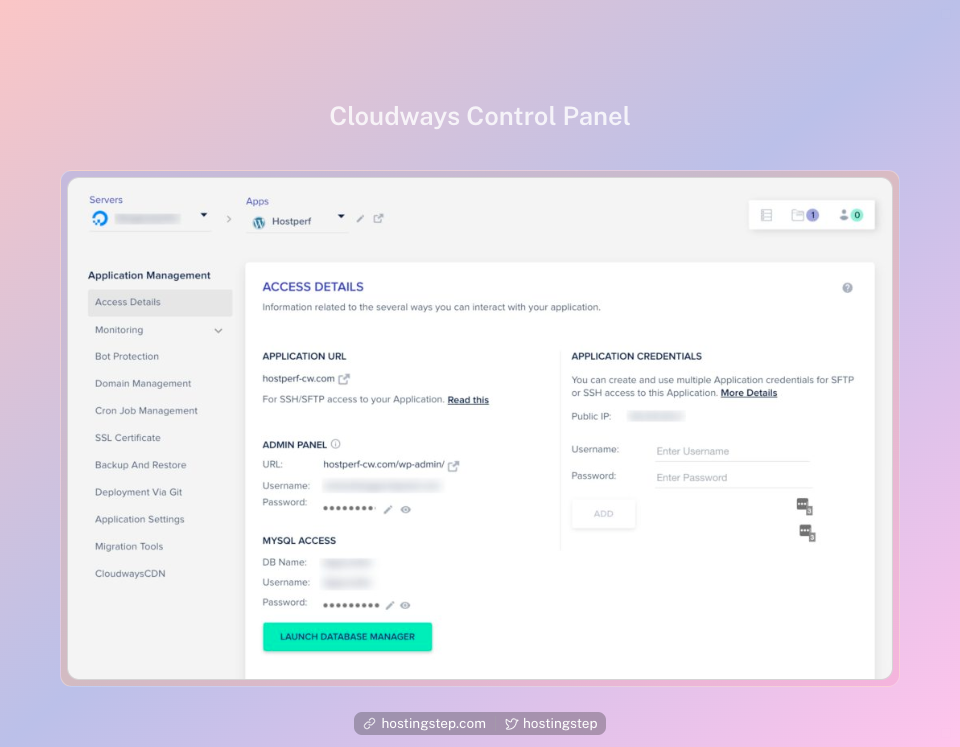
Cloudways comes with its advanced control panel that helps you manage even the tiniest settings of your server. However, for most site owners, you will access four or five tabs to manage your site’s regular settings.
CDN
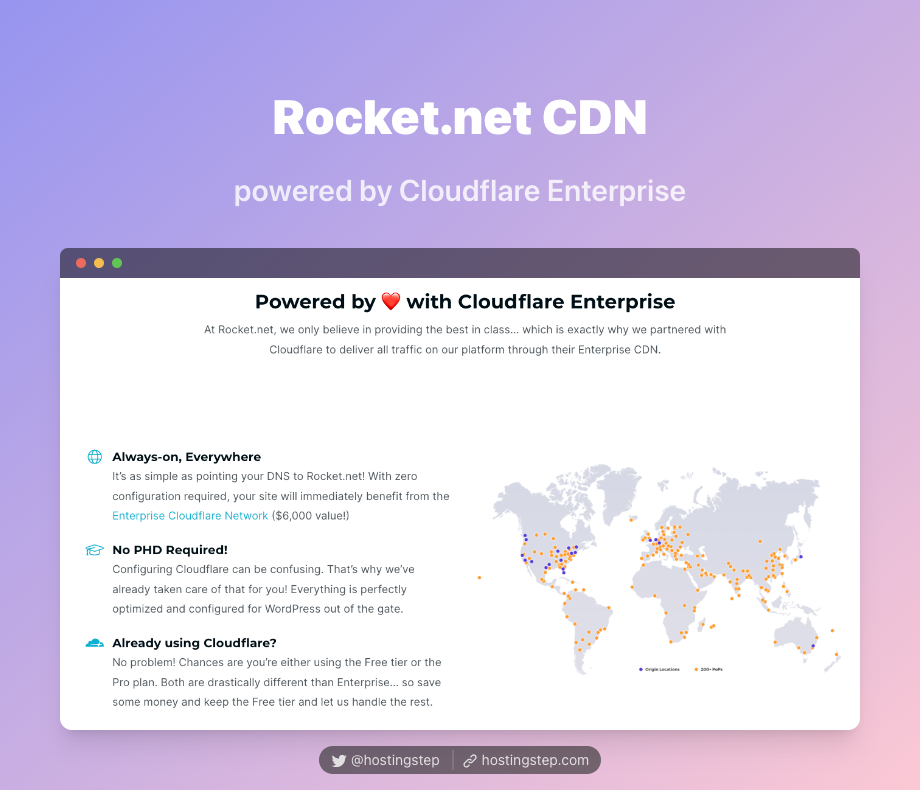
Rocket has an Enterprise Cloudflare CDN solution available for free on all plans. The CDN gives sites the advantage of Brotli file compression, image optimization, tiered caching, and Agro smart routing while serving your content from the closest server. The best part is users don’t have to configure it at all. Rocket would take care of everything about the CDN.
Cloudways comes with a built-in CDN powered by Cloudflare Enterprise with features such as built-in Asset Optimization, Low TTFB, and exceptional caching. Cloudways offers a CDN add-on on all plans for easy CDN integration. However, it charges $4.99/month for 100GB bandwidth.
Backups
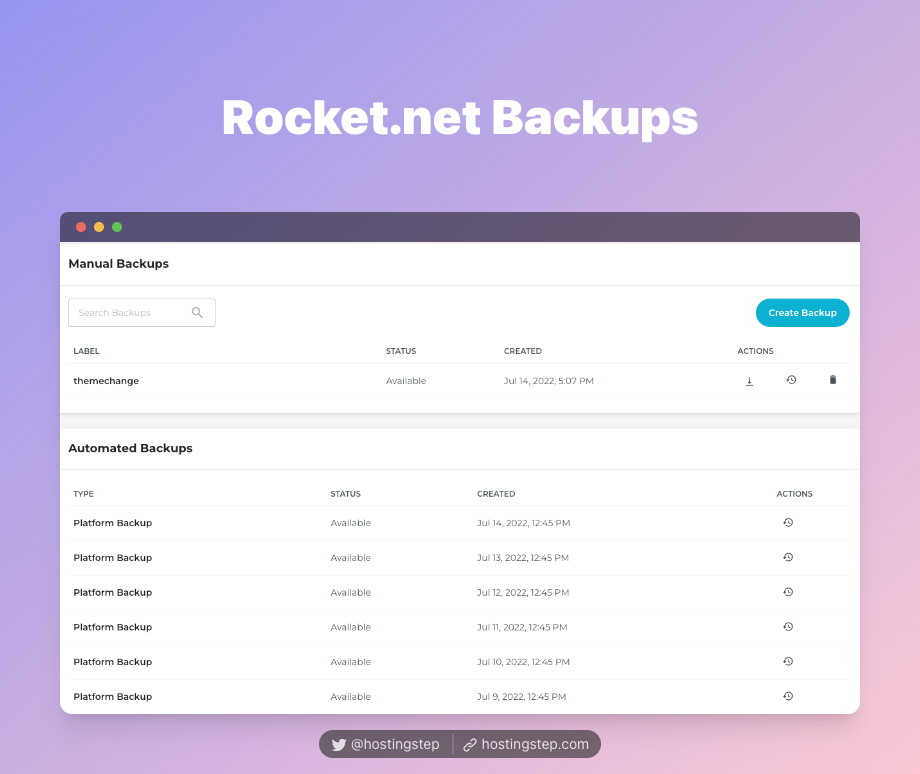
Rocket has a reliable backup system and free automated daily backups on all plans. The backups are usually taken at night and saved on the Rocket server for disaster recovery. The host also allows customers to restore any backups at any time.
Further, Rocket also offers on-demand backups on all plans, which means you can get a complete backup of your site before performing any site maintenance. All the plan comes with 14 days of backup retention.
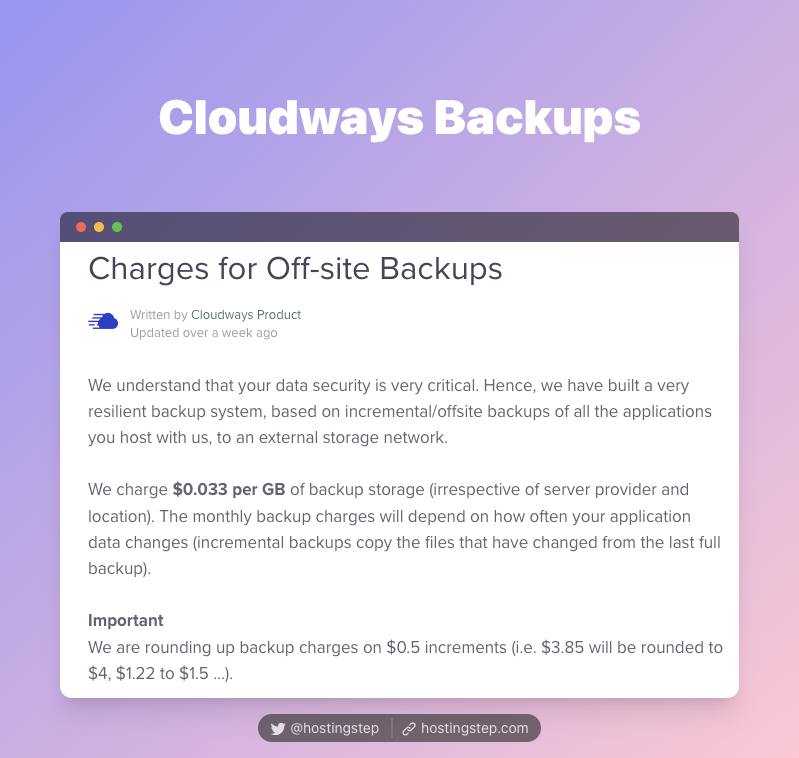
Cloudways doesn’t offer free backup and charges $0.33 per GB. The backup system is reliable, and the host takes automated daily backups of sites and saves them to an external storage network.
Staging
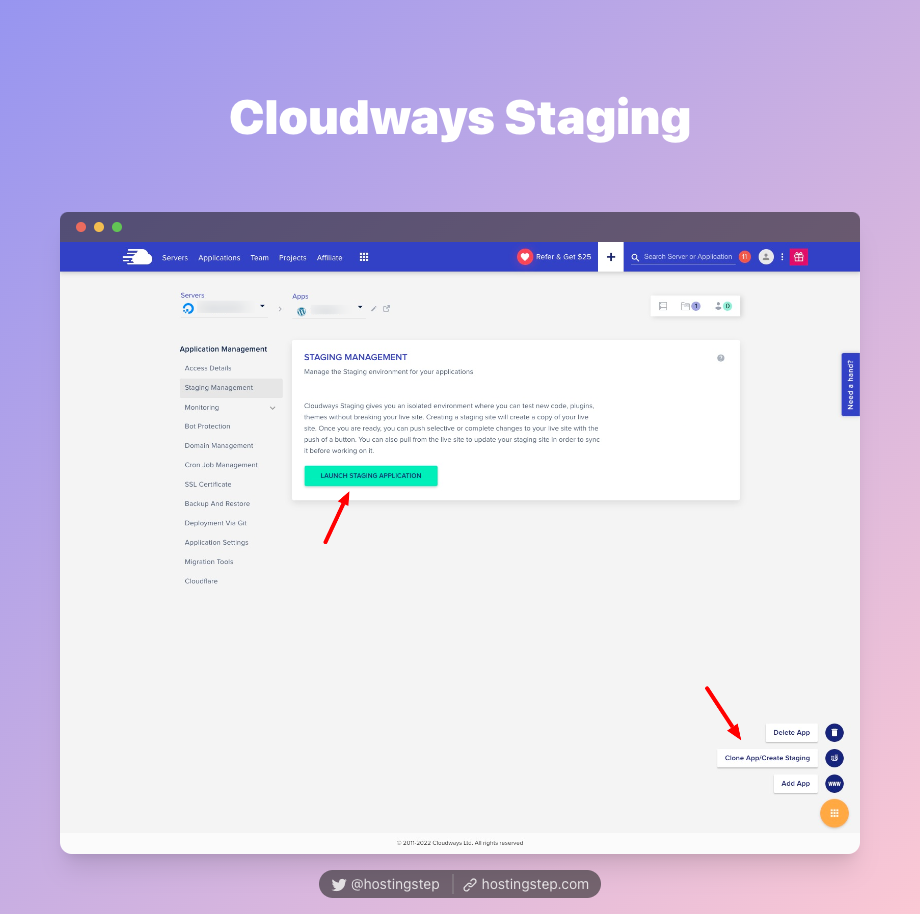
Rocket offers straightforward staging site creation, and it’s free on all plans. It helps you create staging sites, test your changes, and deploy significant changes from staging to a live site.

Staging is free in Cloudways, and the process is pretty simple, from creating a staging site to pushing the changes to the live site.
Discounts
The Cloudways Promo code gives you 25% OFF for first-month billing, which is more than enough to test their hosting services.

Support
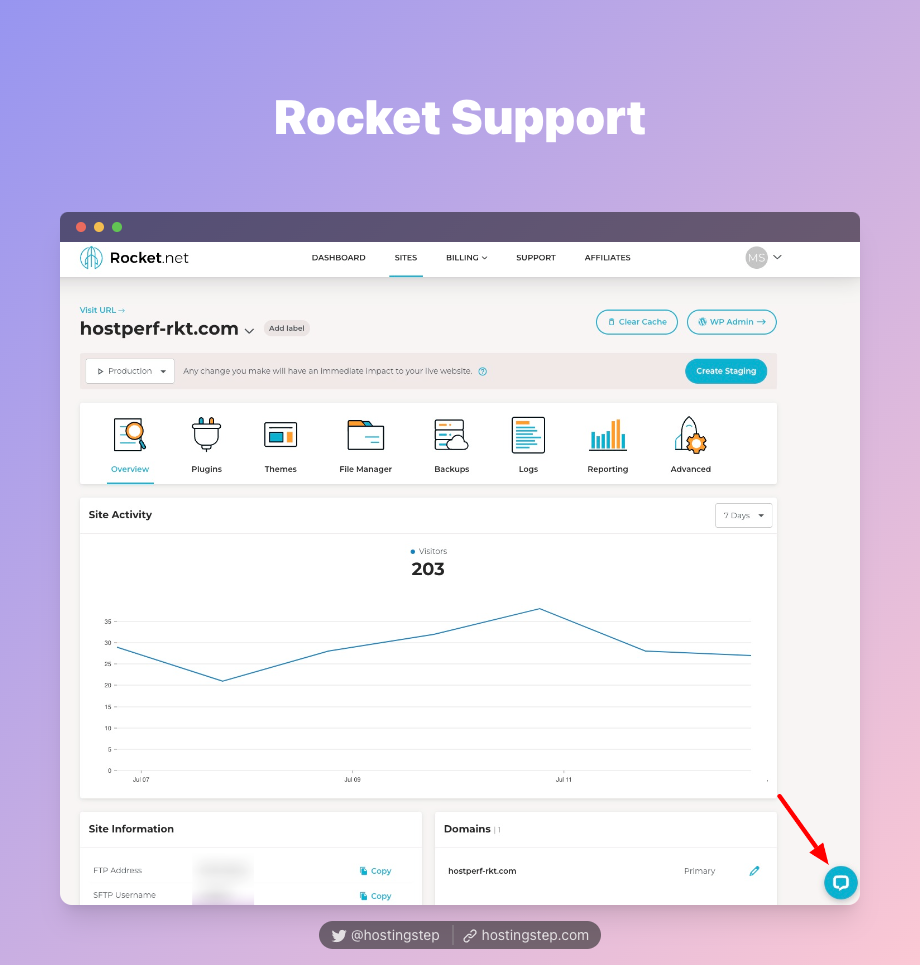
Rocket offers customers brilliant support through 24×7 live chat, phone, and email and a comprehensive knowledge base. Most importantly, the support team has the most experienced WordPress executives to assist the customers.
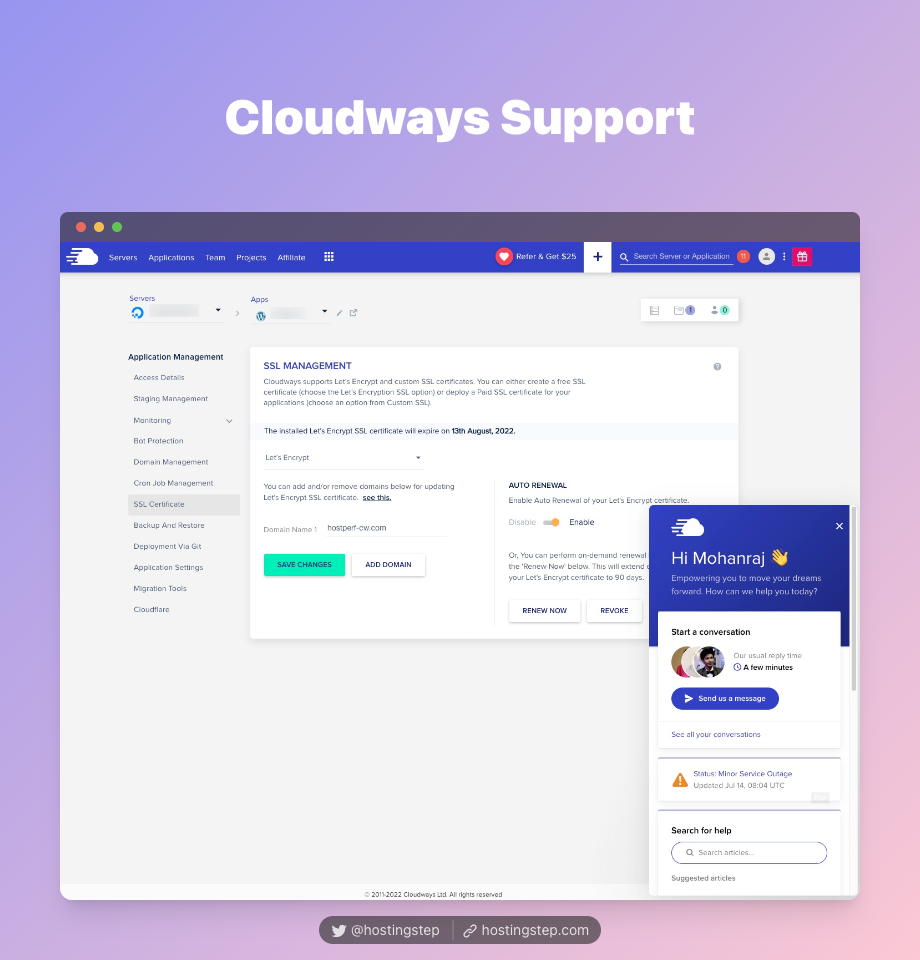
Cloudways also has one of the best support teams in the industry, and the team does a great job of assisting customers through 24×7 live chat and ticketing. One can access customer support inside their dashboard. Further, the host also has advanced and premium support add-ons for customers who need quicker assistance.
We have a well research Rocket.net Review which offers better performance comparison with historical performance data comparison. Check it out.